


Classification of Forklift Trucks
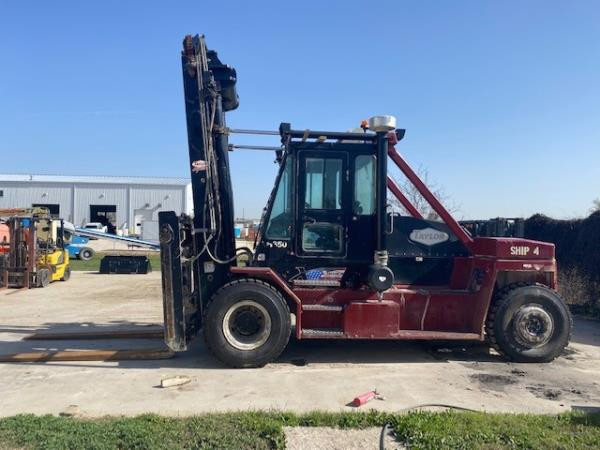
Forklift trucks have been working its magic for approximately 100 years now. Even now, this piece of machine is found in every warehouse operation throughout the world.
The very first forklifts were built because of manpower shortages that were caused by World War I. Businesses such as Clark and Yale & Town introduced the material handling machine that utilized powered lift tractors in their plants. During the year 1918, Clark saw the potential for these machines and started selling them.
It was in the 1920s that the forklift design changed from a basic tractor with an attachment to a dedicated equipment that was equipped with a vertical lifting mast. The forklift developed and became more advanced with WWII. The forklift played a key part during this time in the handling of materials for various armies all over the world. It was also during this time that wooden pallets were introduced which proved the need for the lift truck within the material handling industry.
When the Second World War ended, the forklift gained momentum and continued to develop. In the 1950s, forklifts which utilize batteries made an appearance. There were other more specialized forklift models introduced like the Narrow Aisle Reach truck. This particular type was made by the Raymond Corporation. In the 1960s and 1970s, improvements were made within the electronic controls area. This made forklifts much more versatile and businesses were able to look at warehouse efficiency.
Nowadays, the forklift could be powered by numerous fuel options like electric battery, diesel, CNG or compressed natural gas, gasoline, LPG or liquid propane gas. The very first hybrid forklift was developed by Mitsubishi. It presently runs on diesel battery and lithium ion. This particular kind consumes thirty nine percent less fuel than existing models. Statistics prove that its carbon dioxide emissions are around 14.6 tons less compared to those forklift models which are powered by IC or internal combustion engines.